

FUKUSHIMA NEWS
~ ~ ~ ~ ~ ~ ~
Help the
NO NUKES Y'ALL
campaign
y'all
Nuclear Watch South is a 501(c)(3) tax-deductible charitable organization.
{ thanks }
PayPal
It's your
safe and secure
way to donate on-line
 |
~ ~ ~ ~ ~ ~ ~
Educating and activating the grassroots to create a
nuclear-free future
~
PO Box 8574
Atlanta, GA 31106
404-378-4263
Cell 404-432-8727
info@nonukesyall.org
NO NUKES Y'ALL!
PLUTONIUM | MOX LEGAL INTERVENTION
Finally ... really ...
MOX IS DEAD!
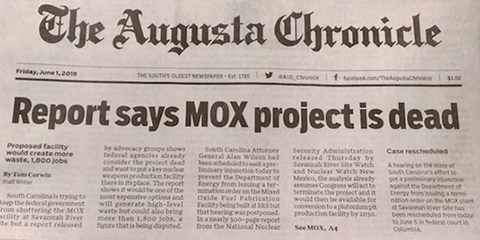
READ THE ARTICLE HERE
NRC turns blind eye to MOX cyberterrorism risks
Nuclear Watch South's request for public hearing outvoted
WASHINGTON (May 14, 2015)—The Nuclear Regulatory Commission (NRC) has ruled that it can grant an operating license to a controversial Department of Energy (DOE) plutonium fuel processing plant without determining that the DOE’s cybersecurity program can adequately protect it from cyberattacks.
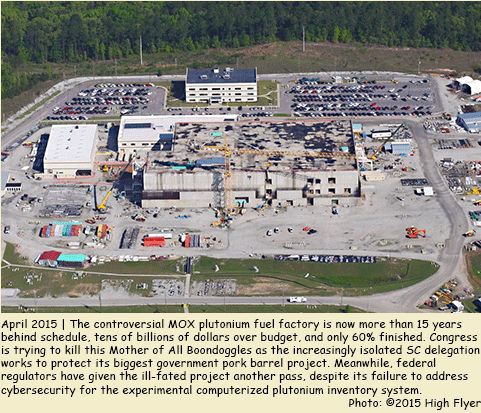
In its April 23 two-to-one decision, NRC commissioners rejected an appeal of a ruling by the agency’s Atomic Safety and Licensing Board (ASLB), which itself was split two-to-one. It was the final issue being litigated in a hearing contesting an operating license for the Mixed Oxide (MOX) Fuel Fabrication Facility, now under construction at the DOE’s Savannah River Site in South Carolina. The facility, whose mission is to convert plutonium from surplus nuclear weapons into commercial nuclear fuel, is years off schedule and is projected to cost tens of billions of dollars more than originally estimated.
The NRC decision, released publicly on May 7, approved an unorthodox approach proposed by the facility contractor, CB&I AREVA MOX Services (originally Shaw AREVA MOX Services) to track plutonium so plant operators can rapidly detect thefts. Instead of the traditional approach, where plant personnel would periodically retrieve and inspect cans containing plutonium to verify they are intact and stored properly, MOX Services would rely almost entirely on computer systems and data to provide that assurance. This approach would be particularly vulnerable to cyberattack because it relies excessively on computer systems and de-emphasizes using human observation to verify thefts.
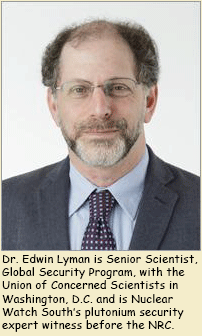 “The NRC’s decision reflects an astonishing level of complacency about growing cyberthreats to our nation’s critical infrastructure,” said Edwin Lyman, a senior scientist at the Union of Concerned Scientists (UCS) and an expert witness during the ASLB proceeding. “It is tantamount to leaving a door wide open for hackers, terrorists and foreign governments to interfere with the computer systems that the MOX facility will rely on to detect stolen weapon-usable plutonium. Cyber intruders could exploit these vulnerabilities to facilitate or cover up plutonium thefts by falsifying accounting records and compromising security systems.”
The intervenors— Nuclear Watch South, Blue Ridge Environmental Defense League, and Nuclear Information and Resource Service — testified that the NRC should reject this novel, untested approach. Barring that, the intervenors argued that NRC approval of the plan should be contingent on an NRC finding that the plant’s computer systems would have stringent protection against cyberattacks to ensure that plutonium inventory data could not be manipulated. The NRC rejected their arguments, upholding the ASLB ruling that the adequacy of MOX Services’ cybersecurity program was beyond the scope of the proceeding.
The ability to accurately account for plutonium in near-real time to the kilogram (kg) level is a crucial aspect of MOX plant operations, Lyman, a physicist, explained. At peak capacity, the plant will process as much as 3,500 kg of plutonium per year, while a terrorist would only need 8 kg for a bomb. If someone claimed to have built a nuclear bomb with plutonium stolen from the MOX plant, operators would want to know as quickly as possible whether or not the threat was credible. But trying to determine whether 8 kg were missing in a facility with hundreds of times that amount in storage is akin to finding a needle in a haystack unless there is a precise, robust and reliable accounting system. The accounting system and the data it contains also must be protected against manipulation.
 However, the NRC claims that since it does not currently have regulations that address cybersecurity at fuel facilities such as the MOX plant, it is not legally required to ensure that the MOX plant’s cybersecurity protections are adequate.
“Even though the NRC doesn’t have regulations in place for cybersecurity at facilities like the MOX plant, it has the authority to require stringent cybersecurity protection measures as a condition for granting an operating license,” said Diane Curran, counsel for the intervenor groups. “Instead, a majority of the NRC commissioners chose to ignore the problem.”
In his dissent on the April 23 NRC ruling, Commissioner Jeff Baran apparently agreed with the intervenors’ position as well as the position of dissenting ASLB Chairman, Judge Michal Farrar. “MOX Services does not currently have a cybersecurity plan,” Baran wrote. “I find nothing in the record stating that either the [Atomic Safety and Licensing] Board or the NRC staff made a determination regarding the adequacy of cybersecurity at MOX Services’ facility.… I see no basis for finding that MOX Services’ proposed [material control and accounting] systems will satisfy” the NRC’s regulations.
Baran was outvoted by Commissioners Kristine Svinicki and William Ostendorff. Chairman Stephen Burns did not vote.
Baran’s concern about cybersecurity is also evident in the results of an NRC working group review of voluntary cybersecurity programs at NRC-regulated fuel cycle facilities. In a February 2015 dissent, in which Baran called for the NRC to issue “immediately effective” cybersecurity orders for fuel cycle facilities, he commented that “what the working group found is sobering” and “the current cybersecurity vulnerabilities present at fuel cycle facilities and the lack of agreement by licensees to voluntarily implement an adequate cybersecurity program … necessitates the issues of an order.” The details of what the rest of the working group found were not made public.
The MOX project has steadily lost supporters as its projected cost has skyrocketed and its completion date has slipped. The most recent external cost review, conducted by the Aerospace Corporation, estimated a lifecycle cost of the MOX program of about $52 billion to $115 billion (in constant dollars) and a completion date as late as FY 2100. The Obama administration has said the project is “unaffordable” and is studying less costly options, but the MOX facility’s supporters in Congress have compelled the DOE to continue construction. The Aerospace report also pointed to other factors that increase the level of project risk, including cybersecurity, citing “the potential for delays due to evolving cybersecurity regulations and the need to meet those requirements prior to certification.” The report also noted that “the heavy reliance by the [MOX facility] on software and automation makes this risk particularly problematic.”
“The Aerospace report confirms that the NRC’s foot-dragging approach to cybersecurity at the MOX plant is itself a threat to the viability of the project,” said Lyman. “The NRC is not doing the applicant any favors by allowing it to kick the cyber can down the road. In its casual dismissal of the urgent threat of cyberterrorism, it is out of step with virtually every other federal agency.”
MOX Plutonium Fuel License Approval Granted
Nuclear Watch South: Questions Remain Unanswered
Atlanta, GA, 2/28/14: The Atomic Safety and Licensing Board (ASLB) of the Nuclear Regulatory Commission (NRC) issued its initial decision on the long-running MOX plutonium fuel factory operating license case on February 27, 2014. The two-page decision provides "notice regarding the issuance of initial decision." The full initial decision, because of the sensitive information it contains, is being mailed to the parties by first-class mail. The plutonium factory has been under construction at Savannah River Site (SRS) in South Carolina since 2007.
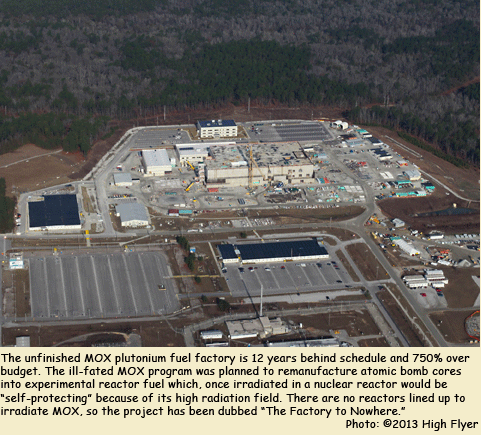
The notice states "the Board rules in favor of the Applicant (Shaw AREVA MOX Services)" on the outstanding security-related contentions brought by Nuclear Watch South and others. Details of the decision, including whether conditions have been attached to the pending license and whether the long-awaited decision was unanimous will be available next week. The full decision will not be publicly available until it undergoes scrutiny and possible redaction by the NRC's Office of Nuclear Security and Incident Response. The decision is subject to appeal and will not be final until it is reviewed and approved by the Commission.
Glenn Carroll, coordinator of Nuclear Watch South comments, "The MOX program is supposed to be all about plutonium security and we are very curious to see how the panel resolved the stark disconnect between MOX Services' plans for virtual computer-reliant plutonium accounting and the clear regulatory requirements for actual, physical plutonium accounting. The MOX program is proposed to process 50 tons of plutonium and only 15 pounds used as an explosive can obliterate a whole city. The devil is truly in the details with respect to MOX and this board decision truly matters."
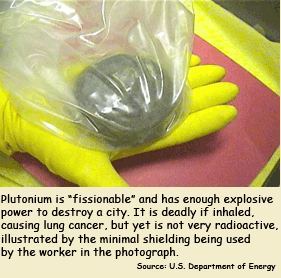 In May 2007, Nuclear Watch South was joined by Blue Ridge Environmental Defense League (BREDL) and Nuclear Information Resource Service (NIRS), in filing formal objections, called "contentions," to issuance of an NRC license to possess and use plutonium by Shaw AREVA MOX Services. Construction Authorization for the MOX factory was issued in 2005. Shaw is now owned by CB&I.
The environmental groups have been supported in the legal intervention by expert witness Dr. Edwin S. Lyman who challenged inadequate plans for plutonium control and accounting at the controversial MOX plutonium fuel factory under construction at Savannah River Site (SRS) in South Carolina. DC-based attorney Diane Curran of Harmon, Curran, Spielberg & Eisenberg became attorney-of-record for the groups in February 2008.
Dr. Lyman, senior scientist with Union of Concerned Scientists, maintains that the planned plutonium accounting methods are so deeply flawed the risk of plutonium theft would be increased rather than lowered if the MOX factory design is licensed to operate without changes to material control and accounting plans.
In a statement issued by Dr. Lyman and the Union of Concerned Scientists about the initial MOX license, Dr. Lyman says:
Although we have not yet seen the details of this initial decision, which is not yet public, we are deeply disappointed and frustrated by this outcome. After years of thorough scrutiny of the applicant’s plan for keeping track of the location and quantity of weapon-usable plutonium in this facility, we are convinced that the plan is deeply deficient and the applicant is simply incapable of securing and accounting for this incredibly dangerous material. The initial decision to grant this facility an operating license, allowing it to take possession of at least 34 metric tons of U.S. surplus plutonium, is reckless and will increase the risk that terrorists will be able to acquire enough plutonium to build a nuclear bomb without detection.
The purpose of the MFFF, which is currently under construction, is to convert plutonium no longer needed for nuclear weapons into a type of nuclear fuel, called MOX, which can be used in operating nuclear power plants. The MOX program, however, has major problems. The estimate for the MFFF’s construction cost, for example, has ballooned from $4.8 billion to $7.7 billion, and the total life cycle cost of the program is now estimated at $30 billion. And even if the plant is built, no U.S. utility has committed to take the fuel, which is far more expensive and troublesome too use than conventional uranium fuel. As a result, the Energy Department is seriously reevaluating whether the program should go forward at all.
In a report released earlier this month, the Government Accountability Office (GAO) audited the cost and schedule estimates of the contractor, MOX Services, and concluded that it ‘did not meet all best practices in GAO’s guides for preparing high-quality, reliable cost and schedule estimates. Not meeting these best practices increased the risk of further cost estimates and delays for the projects….’
The Energy Department should pull the plug on this wasteful and dangerous program before it does any more damage to our economy and security.
The basis of the issues filed by Nuclear Watch South and the groups is Shaw AREVA MOX Services' inability to satisfy U.S. NRC regulations because of a "fundamental and insurmountable design problem: the MOX Fuel Fabrication Facility is based on a French design that was never intended to meet, and is unable to meet, the physical verification requirements of U.S. NRC material control and accounting (MC&A) regulations with regard to item monitoring, alarm resolution, and assessment of alleged thefts." see April 19, 2013 filing
Shaw Areva MOX Services is the U.S. Department of Energy (DOE) contractor building the controversial MOX plutonium fuel factory. Congressional scrutiny of the MOX program is mounting as it has soared 750% over budget and the start-up schedule has slipped by 12 years. Originally projected to start up in 2007, contractors now say the MOX plutonium factory is still only 60% complete and will not be ready until 2019. The basic premise of MOX to provide plutonium security is the irradiation of plutonium contained in the MOX fuel in a nuclear reactor. This all-important step cannot be completed until DOE secures agreement from a utility to load the MOX into its reactors, a condition which continues to elude the agency. Duke Power tested MOX fuel in its Catawba reactor in Rock Hill, SC, for two of three planned cycles and aborted the test when unusual changes to the fuel were detected. It subsequently exited the program and no other utilities have signed up although two quasi-federal public utilities in Washington State and Tennessee have been pressured by DOE.
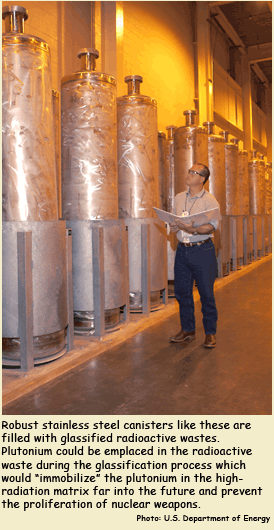 In a press statement issued when Nuclear Watch South, et al. filed proposed findings with the ASLB in July 2013, Dr. Lyman explained: “In order to detect and deter theft and diversion of plutonium, NRC regulations require MOX Services to demonstrate it can verify the presence and integrity of all plutonium items in the MOX Facility. Despite being given two opportunities to show it satisfies these all-important regulations, MOX Services continues to offer half-measures on the cheap. For instance, MOX Services claims that computer programs used to track the plant’s inventory for ordinary business purposes can do double-duty to accurately account for plutonium items for national security purposes, eliminating the need for people to physically access and inspect the items. But given the vulnerability of computer systems to manipulation by adversaries, this data can be corrupted. There is no substitute for direct physical checks."
The groups' attorney, Diane Curran, explained in the July 2013 release that the NRC has fallen down on its own obligation to ensure that the computer programs are safe from cyber attack. "Although the Joint Chiefs of Staff have identified cyber attack as one of the most serious threats to U.S. security, the NRC does not have any regulations for protection of facilities like the MOX factory from cyber attack. In this case, the NRC technical reviewers have unquestioningly accepted MOX Services' statement that it meets U.S. Department of Energy cyber security standards, without reviewing the DOE standards or evaluating whether MOX Services' claim is true. That is a complete dereliction of the NRC's oversight responsibility, and therefore we urge the ASLB to reject the technical staff's conclusion."
Ms. Carroll concludes, "Nuclear Watch South has bulldogged the MOX licensing proceeding for 13 years, and watched as construction problems have proliferated, costs spiralled out of control and the utilities have backed away from MOX use. Our small citizens group has forced significant upgrades to the program in waste handling, seismic planning, and contributed to the national nuclear security debate. We remain dubious that MOX will ever actually be produced despite the ASLB’s decision apparently removing a significant hurdle. Meanwhile, the option to secure the plutonium in the high-level radioactive tank waste now at Savannah River Site remains ever at ready."
The Atomic Safety and Licensing Board (ASLB) of the NRC which is hearing the citizen groups' legal intervention is comprised of Michael C. Farrar, Chairman; Nicholas G. Trikouros and Dr. Paul Abramson.
On March 4, DOE will submit its budget request to Congress asking for MOX funding, likely at a level insufficient to sustain the program. The recent announcement that the MOX Waste Solidification Building will be mothballed for five years and the obvious unsustainability of the program signal the likleihood that the MOX program is on track to shut down.
DOCUMENTS
ASLB Initial Decision
April 2013 Intervenors Filing
July 1, 2013 Intervenors (redacted) Proposed Findings of Fact and Conclusions of Law
Nuclear Watch South Files Legal Findings in MOX Plutonium Security Lawsuit
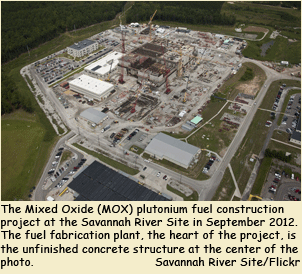 Atlanta, GA, 7/2/13: Nuclear Watch South filed its proposed legal "findings" with the Atomic Safety and Licensing Board (ASLB) of the Nuclear Regulatory Commission NRC) July 1, 2013. NUCLEAR WATCH SOUTH is joined in the legal intervention by Blue Ridge Environmental Defense League (BREDL) and Nuclear Information Resource Service (NIRS) and supported by expert witness Dr. Edwin S. Lyman in challenging inadequate plans for plutonium control and accounting at the controversial MOX plutonium fuel factory under construction at Savannah River Site (SRS) in South Carolina. The groups filed their proposed findings following an unusual second round of closed hearings at NRC headquarters in May. With the various parties having filed proposed findings, the ASLB will follow by issuing an order ruling its finding of fact, which according to the groups should be to deny the MOX license.
Dr. Lyman, a senior scientist with Union of Concerned Scientists, maintains that the planned plutonium accounting methods are so deeply flawed the risk of plutonium theft would be increased rather than lowered if the MOX factory design is licensed to operate without changes to material control and accounting plans. Shaw Areva MOX Services is the U.S. Department of Energy contractor building the controversial MOX plutonium fuel factory and is relying on French plutonium factory designs and methods which Dr. Lyman and DC-based public interest attorney Diane Curran say do not meet U.S. regulations. The MOX factory is currently receiving increased scrutiny from Congress for being 700% over budget and more than 10 years behind schedule while still only 60% complete. MOX is increasingly vulnerable to market pressure as its only plutonium fuel customer, North Carolina's Duke Power, bowed out of the program because of problems with the reactor test of the experimental nuclear fuel.
If the MOX factory were to be completed and operated its mission would be the processing of 50 tons of weapons grade plutonium into a new type of reactor fuel. The conceptual basis for irradiating weapons-grade plutonium fuel in a reactor is to build up hot fission by-products in the reactor which will provide a high radiation barrier to the plutonium which is otherwise vulnerable to theft because of its relatively low specific radioactivity. Fifteen pounds of plutonium is sufficient to produce a bomb with enough explosive power to destroy a city the size of Nagasaki, Japan.
The basis of the issues filed by Nuclear Watch South and the other groups is Shaw AREVA MOX Services' inability to satisfy U.S. NRC regulations because of a "fundamental and insurmountable design problem: the MOX Fuel Fabrication Facility is based on a French design that was never intended to meet, and is unable to meet, the physical verification requirements of U.S. NRC material control and accounting (MC&A) regulations with regard to item monitoring, alarm resolution, and assessment of alleged thefts." (see April 19, 2013 filing) Shaw AREVA proposes to rely heavily on a computerized inventory system to meet certain NRC MC&A regulations in lieu of conventional approaches that entail physical verification of plutonium items.
Dr. Lyman explains why the groups have urged the NRC to deny the license. “In order to detect and deter theft and diversion of plutonium, NRC regulations require MOX Services to demonstrate it can verify the presence and integrity of all plutonium items in the MOX Facility. Despite being given two opportunities to show it satisfies these all-important regulations, MOX Services continues to offer half-measures on the cheap. For instance, MOX Services claims that computer programs used to track the plant’s inventory for ordinary business purposes can do double-duty to accurately account for plutonium items for national security purposes, eliminating the need for people to physically access and inspect the items. But given the vulnerability of computer systems to manipulation by adversaries, this data can be corrupted. There is no substitute for direct physical checks."
The groups' attorney, Diane Curran, says the NRC has fallen down on its own obligation to ensure that the computer programs are safe from cyber attack. "Although the Joint Chiefs of Staff have identified cyber attack as one of the most serious threats to U.S. security, the NRC does not have any regulations for protection of facilities like the MOX factory from cyber attack. In this case, the NRC technical reviewers have unquestioningly accepted MOX Services' statement that it meets U.S. Department of Energy cyber security standards, without reviewing the DOE standards or evaluating whether MOX Services' claim is true. That is a complete dereliction of the NRC's oversight responsibility, and therefore we urge the ASLB to reject the technical staff's conclusion."
Nuclear Watch South Coordinator Glenn Carroll adds, "On top of Congress waking up to the massive mismanagement and cost overruns of the MOX plutonium program, our grassroots groups' legal intervention continues to find glaring problems with the MOX license application and design, problems even with the fundamental premise to provide security and impeccable accounting for 50 tons of plutonium. There is a cheaper and more efficient approach to plutonium security that we should revisit -- the concept of immobilizing plutonium as a waste, instead of wasting more tax dollars on the MOX boondoggle. The beauty of plutonium immobilization is that it closes the circle by securing the weapons plutonium in a glass matrix made from the waste generated in manufacturing the plutonium in the first place."
The Atomic Safety and Licensing Board (ASLB) of the NRC which is hearing the citizen groups' legal intervention is comprised of Michael C. Farrar, Chairman; Nicholas G. Trikouros and Dr. Paul Abramson.
Nuclear Watch South Challenges MOX Plutonium Accounting in Second Legal Hearing
Controversial MOX Plutonium Program Heavily Scrutinized
 Rockville, MD, 5/22/13: A panel of judges for the Nuclear Regulatory Commission (NRC) convened at NRC headquarters in Rockville, MD, on May 21, 2013, for a second hearing of issues raised by NUCLEAR WATCH SOUTH, along with Blue Ridge Environmental Defense League (BREDL) and Nuclear Information Resource Service (NIRS), about inadequate plans for plutonium control and accounting at the controversial MOX plutonium fuel factory under construction at Savannah River Site (SRS).
Dr. Edwin S. Lyman, a senior scientist with Union of Concerned Scientists, is serving as an expert witness in the legal intervention to block the MOX factory operating license and has flagged several concerns that were accepted by the Atomic Safety & Licensing Board of the NRC after several rounds of argument and deliberation. According to Dr. Lyman, the applicant’s proposed plutonium accounting methods are so deeply flawed, the risk of plutonium theft would be increased to an unacceptable level if the MOX factory design is licensed to operate without fundamental changes to material control and accounting plans.
“Plutonium must be tightly monitored and controlled throughout the entire MOX fuel fabrication process to prevent weapon-usable material from falling into the wrong hands,” said Dr. Lyman. “However, Shaw AREVA is proposing a cut-rate approach for plutonium accounting that will make it much harder to detect a diversion or theft of plutonium before it is too late. Their computer-heavy approach could also increase the vulnerability of their accounting system to cyber attack.”
Representing the citizen groups before the NRC in the MOX intervention is Washington, DC-based public interest attorney Diane Curran. The MOX plutonium legal hearing is closed to the public because it deals with some issues that are "Sensitive Unclassified Nuclear Security Information" (SUNSI). Many of the briefs filed in the legal intervention are similarly unavailable for public view. The basis of the issues filed by Nuclear Watch South and the other groups is Shaw AREVA MOX Services' (aka “Shaw AREVA” or “MOX Services”) inability to satisfy U.S. NRC regulations because of a "fundamental and insurmountable design problem: the MOX Fuel Fabrication Facility is based on a French design that was never intended to meet, and is unable to meet, the physical verification requirements of U.S. NRC material control and accounting (MC&A) regulations with regard to item monitoring, alarm resolution, and assessment of alleged thefts." (from an April 19, 2013 filing by Nuclear Watch South, BREDL and NIRS). Shaw AREVA proposes to rely heavily on a computerized inventory system to meet certain NRC MC&A regulations in lieu of conventional approaches that entail physical verification of plutonium items.
The groups’ attorney, Diane Curran said, “At the first hearing in the spring of 2012, it was clear that MOX Services is either unwilling or unable to satisfy the clear requirements of NRC regulations for a means to verify the presence and integrity of plutonium items. This hearing is intended to give MOX Services another chance to show it will comply with the requirements. But MOX Services has done nothing to show that fundamental defect in its plutonium control and accounting program has been resolved. The NRC therefore lacks a legal basis for issuing an operating license to MOX Services.”
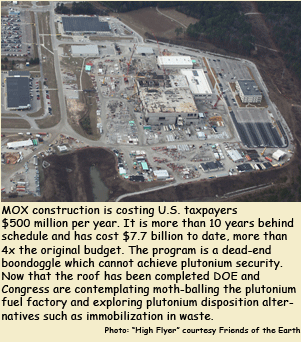 The MOX legal hearing comes as Congressional budget considerations have highlighted other problems with the Department of Energy's plutonium disposition program and the MOX plutonium fuel factory in particular. DOE now estimates that completion of the MOX factory under construction at SRS will cost $7.7 billion, or nearly four times the initial estimate, and is more than a decade behind schedule. Moreover, no commercial reactors have been secured to irradiate the MOX plutonium fuel, which was the basic intent to provide a high-radiation barrier to "protect" the plutonium from theft or diversion into nuclear weapons. Dr. Lyman has famously called the MOX plutonium program "the MOX factory to nowhere." DOE is currently proposing to cut the MOX budget, slow down construction of the incomplete factory, and seek alternatives to MOX for secure disposal of plutonium.
Nuclear Watch South Coordinator Glenn Carroll has actively participated in all phases of MOX licensing and will also attend Tuesday's hearing. “We are delighted that DOE has finally realized that the billions of tax dollars being drained by the ‘MOX factory to nowhere’ is a huge waste of money, as we have become well acquainted with the serious plutonium security gaps that remain unaddressed in 13 years of licensing review,” she says. “Despite Senator Graham’s desire to save the pork-barrel MOX program for his state, the MOX program will never satisfy U.S. treaty obligations if the plutonium fuel is never irradiated in a reactor.
"There are viable alternatives to MOX which are cheaper, safer and more efficient and it is high time to put them on the table. Highly radioactive tank waste and orphaned plutonium already at SRS are a ‘marriage made in heaven’ that will solve two dire problems in one righteous program, with jobs and money to satisfy Senator Graham's concerns, too,” Ms. Carroll concludes.
The Atomic Safety and Licensing Board (ASLB) of the NRC which is hearing the citizen groups’ legal intervention is comprised of Michael C. Farrar, Chairman; Nicholas G. Trikouros and Dr. Paul Abramson.
Plutonium Security the Subject of a Citizens Hearing at Nuclear Regulatory Commission
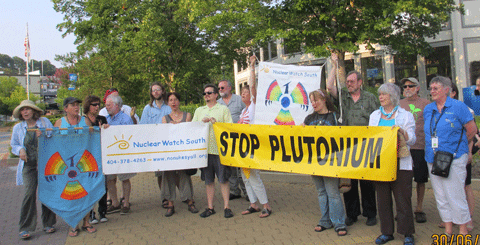
Rockville, MD, 3/9/12: Concerns raised by Nuclear Watch South about inadequate plans for plutonium control and accounting at the MOX plutonium fuel factory under construction at Savannah River Site (SRS) are the subject of a March 7-9 hearing before the Atomic Safety & Licensing Board (ASLB) at the U.S. Nuclear Regulatory Commission (NRC).
Nuclear Watch South is one of three parties who have intervened to block the issuance of an operating license by the NRC to the MOX plutonium processing factory. Expert witness Dr. Edwin S. Lyman, of the Union of Concerned Scientists, flagged three plutonium control and accounting concerns with serious implications for plutonium security that were accepted by the ASLB for a hearing after many rounds of argument and deliberation.
Dr. Lyman says, “The focus of our contentions about MOX Services’ plutonium accounting methods is to ensure that plutonium can’t be diverted from this factory for malevolent purposes without prompt detection. A primary goal of the plutonium disposition program is to reduce the risks of nuclear terrorism, but the plutonium accounting plan put forward by Shaw Areva MOX Services has major flaws that would actually increase this risk.”
Dr. Lyman's contentions concern the failure of applicant Shaw Areva MOX Services to adequately address material control and accounting (MC&A) for the sensitive fissile material weapons-grade plutonium, which it proposes to fabricate into a new type of nuclear reactor fuel called MOX. The ASLB panel of NRC administrative judges found the issues raised by Dr. Lyman so significant to public safety and national security, that they stated that if Nuclear Watch South had not met the tough standards for launching a public hearing, the ASLB would have had to raise the issues at the NRC itself to see that they are addressed before granting MOX Services a license. In this instance, the “public” hearing is closed to the press and to the public because of the sensitive nature of the issue.
In its April 1, 2011 order accepting the contentions for a hearing, the ASLB said that the “contentions raise significant public safety and national security issues." The order was written by Michael C. Farrar, Chairman and Nicholas G. Trikouros of the ASLB. Judge Lawrence G. McDade dissented from the majority view with respect to the question of whether Nuclear Watch South had met the timeliness criteria in raising the issues but underscored the importance of the concerns being raised by Dr. Lyman for the citizens groups saying, "The question of a serious safety inadequacy in the MOX fuel fabrication facility remains. And any question regarding the ability to meet these requirements can have serious consequences with respect to the possibility of loss or diversion of nuclear materials from the MOX facility." The whole board affirmed McDade’s statement in the April 2011 order.
The first day of hearings took place on March 7 and the final day is scheduled for Friday, March 9. Glenn Carroll, coordinator of Nuclear Watch South, was in attendance at NRC Headquarters in Maryland. Ms. Carroll said, “The ASLB is performing a great public service by bringing increased scrutiny to this huge enterprise which involves tons of plutonium, since only 15 pounds can be used to make a nuclear weapon like the one that destroyed Nagasaki in Japan. The judges’ questions are bringing a level of rigor and thoughtfulness that we haven’t seen from MOX Services,” she continued. “MOX Services is attempting to talk their way out of complying with very clear regulations and if we prevail in compelling their compliance, the whole world will be a whole lot safer.”
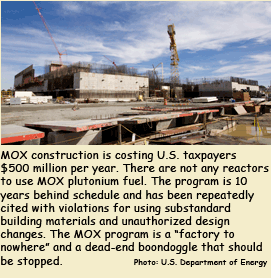 Nuclear Watch South has campaigned, in addition to the legal intervention opposing the license, to cut the $500 million per year budget for the MOX plutonium fuel factory citing that, besides being more than 10 years behind schedule and 400% over budget, there are no reactors in place to perform the necessary irradiation services to MOX fuel. Any reactors starting onto the MOX plutonium fuel path will have to undergo almost 10 years of testing and licensing which indicates that the MOX plutonium fuel factory, if finished, will languish for many years before starting plutonium fuel production.
Nuclear Watch South continues to support an alternative plutonium disposition option, plutonium immobilization, utilizing waste stocks remaining from the original production of the plutonium in reactors at the nation’s nuclear weapons reservations. A new Supplemental Environmental Impact Statement on the plutonium disposition program is currently underway and may look again at the question of treating plutonium as waste. The plutonium disposition program began in 1994 as a joint U.S.-Russia program. Russia is no longer involved.
Blue Ridge Environmental Defense League and Nuclear Information & Resource Service are co-intervenors with Nuclear Watch South on the legal proceeding which was launched in 2007.
For more information contact: Dr. Edwin S. Lyman, Union of Concerned Scientists, 202-841-0181 | Glenn Carroll, Nuclear Watch South, 404-432-8727
Serious Security Issues at MOX Plutonium Factory Recognized by Regulators
Environmental Groups Win Public Hearing on
Plutonium Inventory Accounting
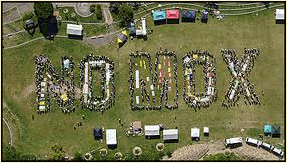 ATLANTA, GA (4/1/11) Concerns about the adequacy of plutonium control and accounting measures at a nuclear fuel fabrication facility now under construction at a Department of Energy (DOE) site in South Carolina were accepted for hearing today by the Nuclear Regulatory Commission (NRC) Atomic Safety and Licensing Board (ASLB).
The issues were raised by Nuclear Watch South, Blue Ridge Environmental Defense League (BREDL) and Nuclear Information & Resource Service (NIRS) who have a legal intervention before the NRC opposing a license for a MOX plutonium fuel factory to operate at Savannah River Site (SRS) in South Carolina. The MOX factory would process up to 50 metric tons of the nation's surplus weapons-grade plutonium into MOX plutonium fuel for nuclear reactors.
Dr. Edwin S. Lyman, a Senior Scientist with the Union of Concerned Scientists in Washington, DC, assisted in the preparation of legal contentions with Diane Curran, DC-based public attorney and Harmon Curran partner, and filed the sensitive unclassified non-safeguards information (SUNSI) concerns about inadequate measures for control and accounting (MC&A) of weapons-grade plutonium on behalf of the environmental groups and their members.
This ruling about plutonium fuel is a great day for public health and national security which are threatened by a very dangerous nuclear project," says Glenn Carroll, coordinator of Nuclear Watch South. "It is frankly ridiculous that Shaw AREVA MOX Services would wait until this late in the game to show up empty-handed without effective plans to account for tons of weapons-grade plutonium! It only takes 15 pounds to fashion a crude nuclear weapons with plans from the internet."
"It is gratifying that the Board has concluded that the intervenors have raised issues of the highest safety significance,” said Dr. Lyman. “It makes no sense for taxpayers to spend billions of dollars on a MOX fuel program that will only increase the risk that terrorists can divert or steal weapon-usable plutonium for use in a crude nuclear weapon. Construction on the MOX plant needs to be halted until these fundamental security issues can be resolved."
Dr. Lyman's contentions concern the failure of applicant Shaw AREVA MOX Services (SHAMS) to adequately address material control and accounting (MC&A) for the sensitive nuclear fissile material weapons-grade plutonium. The panel of NRC administrative judges found the issues raised by Dr. Lyman so significant to public safety and national security, that they stated they would have had to raise the issues themselves to see that they are addressed before granting SHAMS a license had the environmental groups not met the tough standards for launching a public hearing.
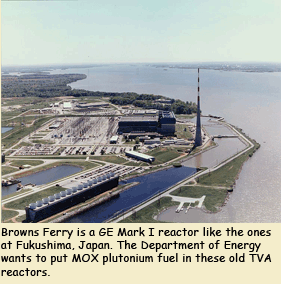 "SHAMS has squandered billions of tax dollars in construction of an unfinished, unsafe design to remanufacture plutonium into MOX," Ms. Carroll says. "The ‘MOX boondoggle’ should have been suspended anyway since there aren't any reactors willing to go through MOX testing and loading. Now, more than ever, MOX should be suspended in light of the MOX plutonium reactor crumbling and spewing plutonium at Fukushima, Japan."
The MOX plutonium fuel factory at SRS proposes to utilize up to 50 metric tons of surplus weapons-grade plutonium to produce an experimental reactor fuel called MOX. A nuclear bomb like the one at Nagasaki, Japan, requires only 15 pounds of plutonium. Plans for nuclear weapons are available on the internet therefore plutonium security is paramount to national, even global, security. The U.S. MOX plutonium program is already in disarray as the MOX factory design is still unfinished, MOX factory construction is more than 10 years behind schedule and is costing taxpayers $500 million per year. A test of weapons-grade MOX plutonium fuel assemblies failed in Duke Power's Catawba reactor in 2008 and Duke withdrew from the MOX program. DOE still does not have any other reactors lined up to use the proposed MOX plutonium fuel but is considering MOX use in Tennessee Valley Authority’s Browns Ferry’s GE Mark I reactors in Alabama. Permission to use MOX plutonium fuel would require reactor licensees to undergo years of testing and licensing by the NRC. The Browns Ferry reactors are of the same design which failed in the nuclear disaster unfolding at Fukushima, Japan. Unit 3 at Fukushima was loaded with “reactor-grade” MOX in September 2010.
Nuclear Watch South and environmentalists continue to call for plutonium immobilization in the glassification process for 60-year-old inventories of high-level radioactive waste in underground storage tanks at SRS as the preferable alternative to MOX plutonium.
The ASLB's 4/1/11/order states: "We believe this [the concerns raised by Nuclear Watch South and others] so strongly that had we found that timeliness concerns do bar admission of these contentions, we would have joined the Dissent’s [Judge McDade, below] suggestion that the matter deserves sua sponte review under 10 C.F.R. § 2.340(a) and referred the matter to the Commission on that basis. In that regard, we agree in its entirety with the Dissent’s explanation that the new contentions raise significant public safety and national security issues." The order was written by Michael C. Farrar, Chairman and Nicholas G. Trikouros of the ASLB.
A dissenting opinion was written by Lawrence G. McDade in which he did not agree that the environmental groups had met the filing deadline, but strongly asserted the serious nature of the nuclear security issues that remain inadequately addressed. "The question of a serious safety inadequacy in the MOX fuel fabrication facility remains. And any question regarding the ability to meet these requirements can have serious consequences with respect to the possibility of loss or diversion of nuclear materials from the MOX facility," said Judge McDade in the 4/1/11 MOX Order.
Environmental Lawsuit Exposes Critical Weakness in MOX Plutonium Fuel Plans
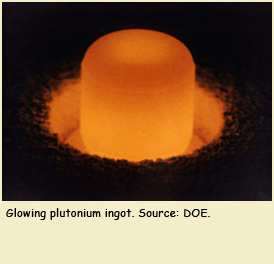 ATLANTA (9/2/09) Failure to deal with waste from processing weapons-grade plutonium into MOX nuclear reactor fuel is holding up a public hearing about the controversial plutonium processing factory at Savannah River Site (SRS).
On August 31, 2009, the U.S. Nuclear Regulatory Commission staff which has the license for a MOX plutonium fuel factory at SRS under review sent a surprising letter to the NRC Atomic Safety & Licensing Board overseeing Nuclear Watch South's legal intervention opposing MOX. The NRC's letter reveals that problems with volatile MOX plutonium wastes remain unresolved and the public hearing sought by Nuclear Watch South, Blue Ridge Environmental Defense League and the Southeast office of Nuclear Information & Resource Service will not be held before 2010 or even later, whenever the waste problems are addressed.
In 2007, Nuclear Watch South along with BREDL and NIRS requested a hearing on the absence of MOX waste plans in Shaw AREVA MOX Services' application to possess plutonium and operate a plutonium fuel factory at the former nuclear weapons complex in South Carolina. The MOX factory, which is already under construction, would process 50 tons of surplus weapons-grade plutonium into a new type of reactor fuel which mixes plutonium oxides with conventional uranium oxides, called MOX for short. Because the weapons material is intended for use in commercial nuclear reactors, the Department of Energy-sponsored project must obtain a license from the NRC which regulates commercial nuclear facilities.
"We are still waiting for SHAMS to prove they can handle the MOX waste," says Glenn Carroll, Nuclear Watch South coordinator. "We have thought all along that this is a most serious stumbling block in the problem-plagued MOX program."
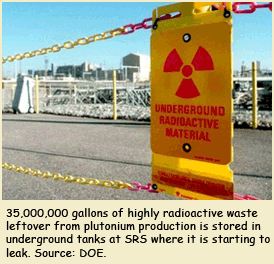 At issue is SHAM's ability to handle extremely dangerous and volatile interactions between radioactivity and solvent acids in MOX waste which produce a poisonous and explosive state called "red oil." The NRC's letter supports contentions brought by Nuclear Watch South exposing the lack of nuclear waste planning by the DOE's MOX contractor SHAMS in its 2007 MOX licensing application.
Despite the $500 million per year in tax money being lavished on MOX factory construction, the final design remains only 75% complete. In addition to the critical waste issues raised by the citizen groups, there are outstanding issues on plutonium security and emergency planning.
"This latest admission by the NRC reveals that licensing the MOX plant is just a roll of the dice," says Tom Clements of Friends of the Earth SE nuclear campaign and who has worked to stop MOX with a coalition of international, regional and local groups since the program's inception in 1994.
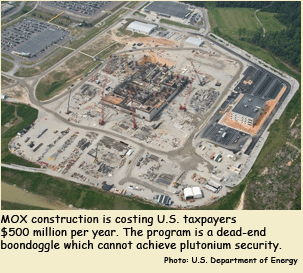 Many other deep problems beset the MOX plutonium disposition project which is now 10 years behind schedule. SHAMS has been repeatedly cited by NRC with construction violations for using substandard rebar and concrete which not meet nuclear building standards, or even conventional standards.
The required MOX fuel assembly test failed at Duke Power's Catawba nuclear station in Rock Hill, SC. Afterwards, Duke Power declined to renew its contract to "burn" the MOX fuel proposed to be produced at the MOX factory. Even if a utility were to sign up to use its reactors for MOX, there is no source for additional trial MOX fuel to conduct the seven-year-long test required preceding MOX use in a commercial reactor.
"It is painful to watch precious tax money being poured into this dangerous dead-end project," says Ms. Carroll. "It would be so much more practical to convert the building to a plutonium immobilization factory and dedicate ourselves to protecting the plutonium forever by glassifying it in the old plutonium waste stored in the 60-year-old underground tanks!"
"To the village square
we must carry the facts
of atomic energy.
From there must come America's voice."
ALBERT EINSTEIN

~~~~~~
~~~~~~
MOX DOCS
CLI-15-09
U.S. Nuclear Regulatory Commission Order Refuses to Consider Cybersecurity at MOX Plutonium Fuel Factory in South Carolina
4/23/15
released publicly 5/7/15
AEROSPACE Independent Assessment
4/22/15
Commissioner Baran’s
Comments on
“Cyber Security for Fuel Cycle Facilities”
2/19/15
UCS Report
Excess Plutonium Disposition:
The Failure of MOX and the Promise of Its Alternatives
by Edwin S. Lyman
December 2014
IPFM
International Panel on Fissile Materials
Alternatives to MOX
Direct-disposal options for stockpiles of separated plutonium by Frank von Hippel and Gordon MacKerron
April 2015
Surplus Plutonium Disposition Supplemental Environmental Impact Statement
National Nuclear Security Administration
May 8, 2015
HOT MOX NEWS
MOX RECEIVES GOLDEN HAMMER AWARD
Congress keeps funding overbudget plutonium site with no real customers
by Kellan Howell
Washington Times
5/7/15
~~~~~~
OBAMA BUDGET PLAN PUTS CONTROVERSIAL PLUTONIUM-CONVERSION FACILITY ON HOLD
by Douglas P. Guarino
Global Security Newswire
3/4/14
~~~~~~
MOX ORDER
ASLB NOTICE
(Regarding Issuance of Initial Decision)
2/27/14
INTERVENORS' PROPOSED CUMULATIVE FINDINGS OF FACT AND CONCLUSIONS OF LAW REGARDING CONTENTIONS 9, 10, AND 11
(redacted)
7/1/13
~~~~~~
DOE MOX PROJECT LOOKS LIKE A FAILURE
by Kennedy Maize
2/27/14
~~~~~~
NY Times on MOX
U.S. Moves to Abandon Costly Reactor Fuel Plant
by Matt Wald
6/25/13
~~~~~~
MOX EXPOSED TO
CYBER ATTACKS
by Derreck Asberry
Aiken Standard
7/3/13
NRC PANEL REVIEWS FEARS PLUTONIUM VULNERABLE TO THEFT
by Douglas P. Guarino
NTI
5/22/13
INTERVENORS' RESPONSE
TO SHAW AREVA MOX SERVICES
April 19, 2013
~~~~~~

HOT MOX NEWS!
In-depth look at MOX plutonium fuel boondoggle from Center for Public Integrity
by Douglas Birch and
R. Jeffrey Smith
Nuclear Waste:
How a huge U.S. nonproliferation program became a major proliferation concern
6/24/13
Nuclear Waste:
A $1 billion Energy Department project overshoots its budget by 600 percent
6/25/13
Nuclear Waste: Extremism in defense of federally-paid jobs is no vice in South Carolina
6/26/13
Nuclear Waste: Washington has ignored a cheaper way to dispose of its plutonium — until now
6/27/13
~~~~~~
NRC BLOG
3/15/12
It's Time to Pull the
Plug on the MOX "Factory to Nowhere"
by Ed Lyman
~~~~~~
MOX ORDER
4/1/11
LICENSING BOARD ADMITS ADDITIONAL CONTENTIONS REGARDING
MIXED-OXIDE FUEL FABRICATION FACILITY LICENSE APPLICATION
NRC Press Release
4/1/11
~~~~~~
MORE ON MOX LEGAL INTERVENTION
NRC MOX LETTER
NRC MOX WEBSITE
NRC MOX LICENSING
MOX LICENSE APPLICATION
RED OIL REPORT
MOX PLAN HITS ROADBLOCK
NUCLEAR FUEL TEST FAILURE RAISES CONCERNS
~~~~~~
PLUTONIUM FACTS
Year plutonium was discovered by Glenn Seaborg and others
1941
Minimum amount of plutonium required for bomb
1 kilogram (2.2 pounds)
Amount of plutonium used in Nagasaki bomb
6.5 kilograms
Average amount of plutonium used in modern atom bomb
3 kilograms
Estimated amount of U.S. weapons-grade plutonium
85,000 kilograms (93.5 tons)
Estimated amount of Russian weapons-grade plutonium
160,000 kilograms (176 tons)
Hazards associated with plutonium
Radiation, fire, inhalation, ingestion, criticality, reactivity, decay
Length of time that
plutonium 239 (weapons-grade) remains hazardous
240,000 years
(Ten 24,000-year half-lives)
Form of plutonium most hazardous to life
Plutonium oxide powder
What happens to plutonium metal when exposed to air
Gradually turns to
plutonium oxide powder
Lethal amount of plutonium oxide powder (inhaled)
2000 micrograms
Lethal amount of plutonium oxide powder (ingested)
500,000 micrograms
Amount of sugar substitute in average 1 gram package
1,000,000 micrograms
Excerpted from Stop Plutonium Fuel: Plutonium Index, compiled by Don Moniak. Blue Ridge Environmental Defense League, www.bredl.org